
Has America Wasted Its Wealth?
On Modern Philanthropy, And Why We Don't Have A Modern Florence

Americans spent $617 billion on philanthropy in 2025. Rough counts suggest some $2 trillion is given globally. And every year it grows more.
These numbers ran through my mind as I walked through the streets of Renaissance Florence and Baroque Rome a few weeks ago, two of history’s great testaments to the power of sustained giving.
Perhaps this is inescapable, as it was in Florence where patron transmuted itself from the Roman Patronus (protector, a derivation of pater–father) to the contemporary meaning of sponsor, someone who funds culture. (That this is only the most prominent of several fun mistranslations from Classical Antiquity to the Renaissance did not escape notice.) Since then, few have managed to surpass the original fathers of giving, Cosimo and Lorenzo (Il Magnifico).
In a 1471 accounting, Lorenzo Medici estimated that his his family had given 663,000 florins in patronage since 1434, equivalent to, at a minimum, $300 million in gold today, and plausibly well over a billion when adjusted for the equivalent years of skilled labor at today’s wages. He didn’t discriminate between giving to the arts, architecture, or taxes, viewing all three as a part of his civic obligation. Where Cosimo cultivated Brunelleschi and Donatello, Lorenzo had Da Vinci, Michelangelo, and Botticelli. But these were just two men in one city, spanning less than a century. Yes, they were the wealthiest family in the world at the time. And yes, they would be joined by other families, whose amalgamated commissions would later find homes in the Uffizi and Accademia. And yes, they were funding these artists before their works regularly sold for hundreds of millions of dollars. Not a bad return on investment.
But this offers little comfort when comparing the collective patronage of this small pin on the map to another pin around the world. A pin that enjoys far more wealth and prosperity today than even the Medici could imagine. 15th century Italy didn’t have running water, we must remember. Looking at the one sad tower of a downtown with serious claims as playing host to the greatest golden age in human history, is to court the suspicion that something has gone terribly wrong.
Where is San Francisco’s David? Are we in the long winter, waiting for the Spring of talent to flower again? Do we not possess 3 orders of magnitude, at least, more wealth than those fathers of 6 centuries ago? The most famous sustained patronage in the history of the world still only amounts to a sum that would be hidden in a standard excel column when compared to the annual amount that we, a country regarded as having no high culture whatsoever, spend in a few months.
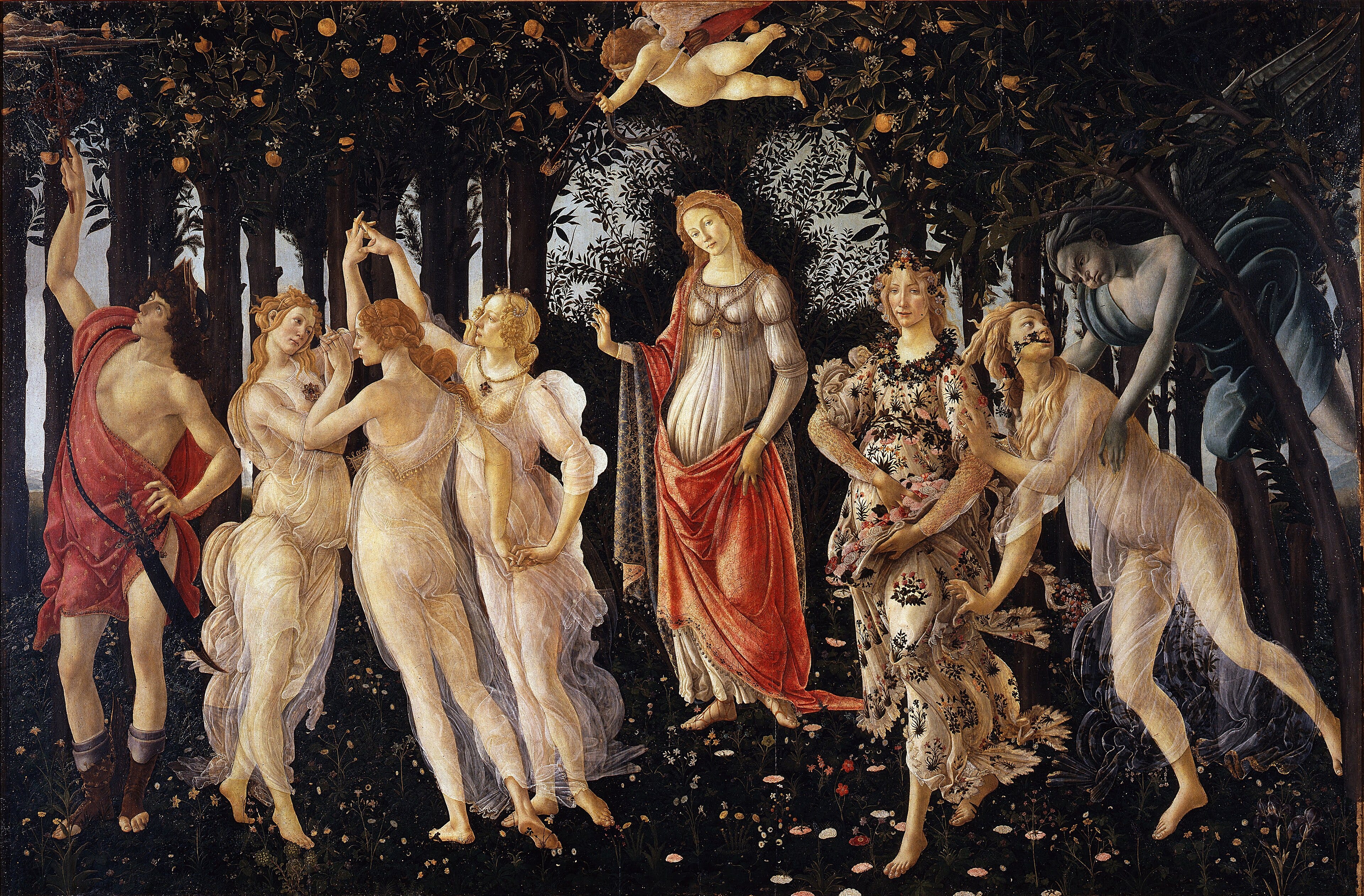
Where’s our 21st century golden civilization? Never before has so much money been wielded in the service of patronage, yet we have less to show for it than long-forgotten cultures the sands of time have covered several times over.
Or don’t we?
Patronage has always served a dual purpose. Papal State giving reflected both the personal and the ethical. While churches were certainly status symbols for the families who erected, and adorned, them in stone, gold, and art, they could only exist for the glorification of God, for whom the endeavor was sanctified.
Part of why we haven’t created cities that look like Siena or Angkor Wat is that there are far more places to put our money today. And there are far more ethical claims on where that funding should normatively go. 16th century patrons in Haarlem were mostly limited to giving to the church, who then built sanctuaries and almshouses in their benefactors’ honor. Their 21st century counterparts in Harlem can donate to a seemingly countless number of endeavors; gene therapy research, animal shelters, after school sports programs, protecting endangered species, survivors of domestic abuse, political campaigns, diaspora cultural organizations, and yes, art.
In the great Patron States, a near total control of a city (or state’s) purse strings could be controlled by a single person (see, Sixtus V), who might direct massive sums towards whatever projects they valued. Now, the market has become decentralized, expanded to more participants.
As the Renaissance gave way to the Enlightenment, values changed. Humanism decentered the Divine, promoting a rational secularism. This change in values brought a change in funding. Science, medicine, and natural philosophy gained primacy. Industrialization scaled up these green-shoots, as urbanization demanded advances in engineering, chemistry, and pedagogy itself.


The institutionalization of research universities dedicated resources to funding progress, without explicit commercial gain. Modernism expanded this further still, where nations superseded families as the ultimate benefactor, pooling unprecedented sums of capital to further all of the Post-Enlightenment fields in addition to Global Health, broad social safety nets, and advanced technology. DARPA is, under this telling, one of the most successful philanthropic institutions humanity has conjured, creating the Internet, GPS, and Vaccines that have expanded human flourishing and saved millions of lives.
But what’s millions to billions? The Rockefeller Foundation funded 20 years of Norman Borlaug’s research into dwarf wheat, which produced disease-resistant plants that could hold far more grain than non-modified versions. Mexican yields doubled within seven years of the introduction of new wheats, and India’s quadrupled, averting massive famines that threatened to kill tens of millions in developing nations. In the fullness of time, Borlaug’s research has saved a billion lives.
The British Parliament funded the dissemination of Edward Jenner’s Smallpox vaccine worldwide for free, and, along with the U.S. Government, mass produced Fleming, Chain, & Florey’s penicillin antibiotic. The University of Vienna funded Karl Landsteiner’s research into Blood Groups, which made safe blood transfusions possible. Combined, these breakthroughs saved billions of lives, as well.
The results, for humanity, have been inarguably, overwhelmingly positive. Magic, even. Global life expectancy has exploded, rising from around 29 years in 1870 to more than 73 today–driven in large parts by declines in childhood mortality from around 30% in Sweden in the 19th century, to less than .25% today. Though the world’s population has grown by 7 billion people (nearly 600%), the share of the population living in extreme poverty (defined as living on less than $3 a day) has dropped monumentally from 80% of the population in the middle of the 19th century to less than 10% today, with the most significant declines coming since 1990 thanks in large part to foundations viewing patronage as a global effort, not an individual one.
I could go on, but you surely get the point. Things have gotten much better thanks to the evolution of patronage. To the unobservant eye, it can feel like we’ve regressed meaningfully over the last century–at least aesthetically. How quick we adjust to the wonder of progress.
The truth is we’re living in a golden civilization. I’m writing this essay on a piece of technology that would be mistaken for witchcraft little more than a century ago on a train blasting through mountain tunnels going 300 km/hour protected from the 100 degree heat inches from my face an ocean away from where I was born–and this is (partially) how I make my living. This is not all patronage, of course (though some of the writing is), but the fact that most of the component parts were only made possible by it is simply remarkable.

That’s Fine. Good, Yes, you may be saying. But why couldn’t we have achieved this without the physical world devolving to the point it has. Dallas, for all of its prosperity, is as foreign to Florence as a Hadron Collider (funded by patronage) is from Bob the Builder (a cheap transactionalist).
Why does it feel that we do not have a city, or institution, that worthily honors our cultural output? The answer, as with many things, is unsatisfying. Part of it is that much that masquerades as patronage is simply wasted. On politics. On lobbying. On…uh… intimidating “enemies of the people” and corrupted non-profits, which can only be described in the most charitable interpretation as counterproductive.
But so too, did the Florentines, as well as the Romans. Positions of power were finessed, and passages to heaven were bought.
The other, more salient reason why we don’t have our own Florence, is that those patrons who do donate to cultural causes follow a very different set of guiding beliefs. Though there are some who are unrefined and rely on others for their personal taste (a surefire way to deliver an insipid grant of patronage), many more are quite cultivated, to a rather precise degree. But cultivation has not leaned towards the Beautiful, The Good, or The True.
Rather than striving for what is lovely, cultural patrons have been guided towards asking what’s challenging, or requires reconciliation via confrontation. For many, their patronage is grounded in an oppositional dialogue that evokes no deep or spiritual connection because it is foundationless. Try though they might, much of what they fund is contrived, rather than earnest.
The best patrons are the most earnest. They are those who work diligently towards shaping the world in service of that which they most sincerely, personally favor, not what they oppose. Abstract plans to “confront injustice” are far less successful than a positive striving towards improved empirical educational or income outcomes. Or simply towards delight, glorifying the secular.
Still more try to launder their reputation through “the right” commissions. But this is not patronage; the ethical is absent. As such, it falls into personal spending; facile consumption in pursuit of hollow prestige. This has little to do with a given style or aesthetic. A Georgian or a Modernist home can both be furnished with considerable grace, or vulgar garishness. The line is thin.
Museums hiring the most fashionable architect, or the super rich buying art their dealers think will go up in value, has distorted the discipline. While the best craftspeople have always been able to find a comfortable existence, they never could dream of reaching the heights that a Jeff Koons or Norman Foster enjoy today. Perhaps they always should have.
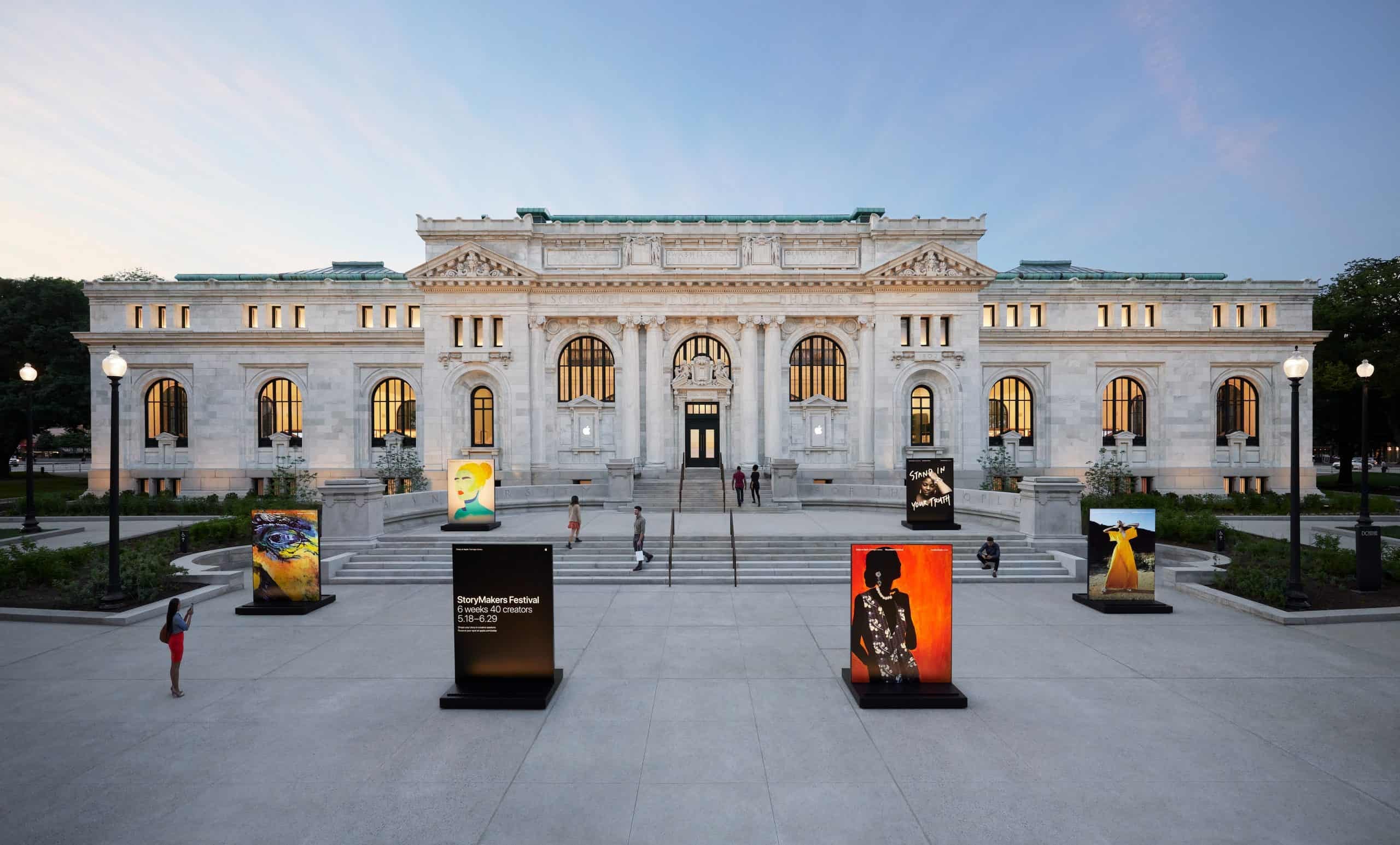
Modern patronage has branched out far beyond the marble chisels funded by Florentine merchants to a number of pursuits limited only by the desire of the sponsor. Consider this point finely. Rarely are we given space to think about how our world has come to be. Who has shaped it, and why they’ve shaped towards those ends. At base, this is nothing more than the embodied dreams of those wealthy, devoted, or powerful enough to bring them into reality.
How will the next generation of patrons choose to shape the world? Will they build libraries, like Carnegie? Donate hospital wings like Chuck Feeney. Or make calculated donations based on what interventions will deliver the most good for the most people? Will they return in a sincere pursuit of the Beautiful, Good, and True, or will their efforts disappear into a cloud of thin vanity?
Modern Patronage is ubiquitous. It extends far beyond mere philanthropy; it’s more powerful than line items on a national budget, and more intimate than a personal gift, like the dedication of a park bench to a late loved one’s memory.
We may not have Florence, but societally, our powers of curation are far greater. Our wealth is much higher. How will we choose to shape the world around us? Wielded properly, it has already proven the power to change the world many times over.
Don’t despair at the current state of patronage. While America may have gone a few decades without much particularly worth celebrating in our built environment or within our museums (there are, as ever, exceptions), we can still direct historically unprecedented levels of wealth towards reviving these disciplines. And every year, we can direct more if that’s how we choose to orient our giving.
For my part, I believe we can build Florence anew, and that we can do so for a sum that would more than pay for itself in both civic value and enhanced economic development. I believe that we can bet on young artists with promise who don’t subscribe to the games of the contemporary art market. That we can concentrate impact very finely on one block, and then expand outwards. I believe that we can choose beauty, that our patrons can spend some small fraction of the hundreds of billions of dollars they spend across many hundreds of thousands of causes to properly honor our built environment. I believe we can give posterity an inheritance they will be proud of; that we can reverse the course of dissatisfaction of our present cultural moment.
For all of these beliefs to be realized, we need only decide that beauty is once again worthy of patronage. The next Florence, or Rome, or Angkor Wat will not emerge by chance. It will only be built when some group of patrons decide they want it to be, and no sooner. We have it in our collective power to bring that future forward to today.
The thing is the grand buildings and art from florence or even the gilded age are just impossibly expensive now. The renovation (not building) of the main hall at Lincoln center (now David Geffen Hall) was $550M. Projects have become absurdly expensive. We don't have thousands of low-paid masons and laborers building these huge buildings. Even in florence they were running workshops with tons of people. As you mentioned they were not getting paid the way Jeff Koons is getting $8m to make "coloring book" for the Sacramento Kings.